
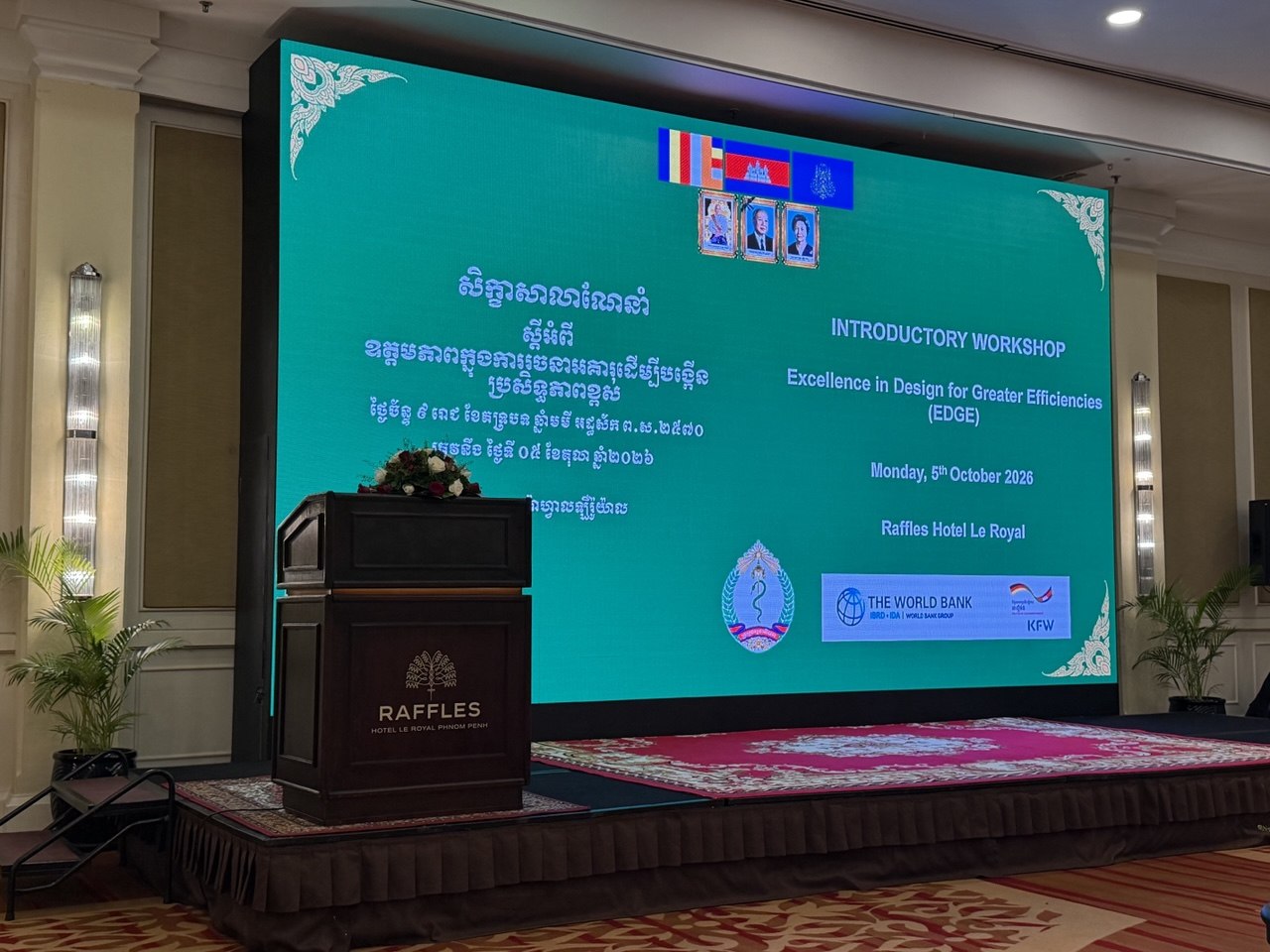
Green building certifications travel well, but they only take root when local teams can see how the requirements fit the projects they already manage. That translation from standard to site was the focus of the EDGE Introductory Workshop held in Phnom Penh on 5 October 2026.
Organized by the World Bank Group, the workshop gathered a Project Working Group from Cambodia’s Ministry of Health, World Bank Group representatives, and other stakeholders at Raffles Hotel Le Royal. The aim was to introduce the EDGE (Excellence in Design for Greater Efficiencies) Green Building Certification framework and to strengthen understanding of green building principles and sustainable building practices in Cambodia, particularly for projects under the Ministry of Health.
What EDGE Asks of a Project
EDGE is a software application and certification system for green buildings developed by the International Finance Corporation, a member of the World Bank Group. It helps developers design low-emission, cost-efficient buildings. Projects that achieve a projected 20 percent reduction in the use of energy, water, and embodied energy in materials compared to conventional buildings are eligible for certification.
The system is now used in nearly 140 countries, but its value in any market depends on whether local teams can adapt the framework to local procurement, materials, and construction practices. That is where the Cambodian workshop began.
From Principles to Practice
The morning opened with Diep Ngoc Do, Green and Resilient Building Program Lead in Mekong Countries at the World Bank Group. He presented an overview of green building benefits and regional adoption trends, showing how green building principles are being applied across Southeast Asia.
Phong Hong Vu, EDGE Technical Specialist at the World Bank Group, followed with an introduction to the EDGE framework itself. He walked participants through the certification requirements and the implementation process, giving the Ministry of Health working group a clear view of what EDGE asks of a project team.
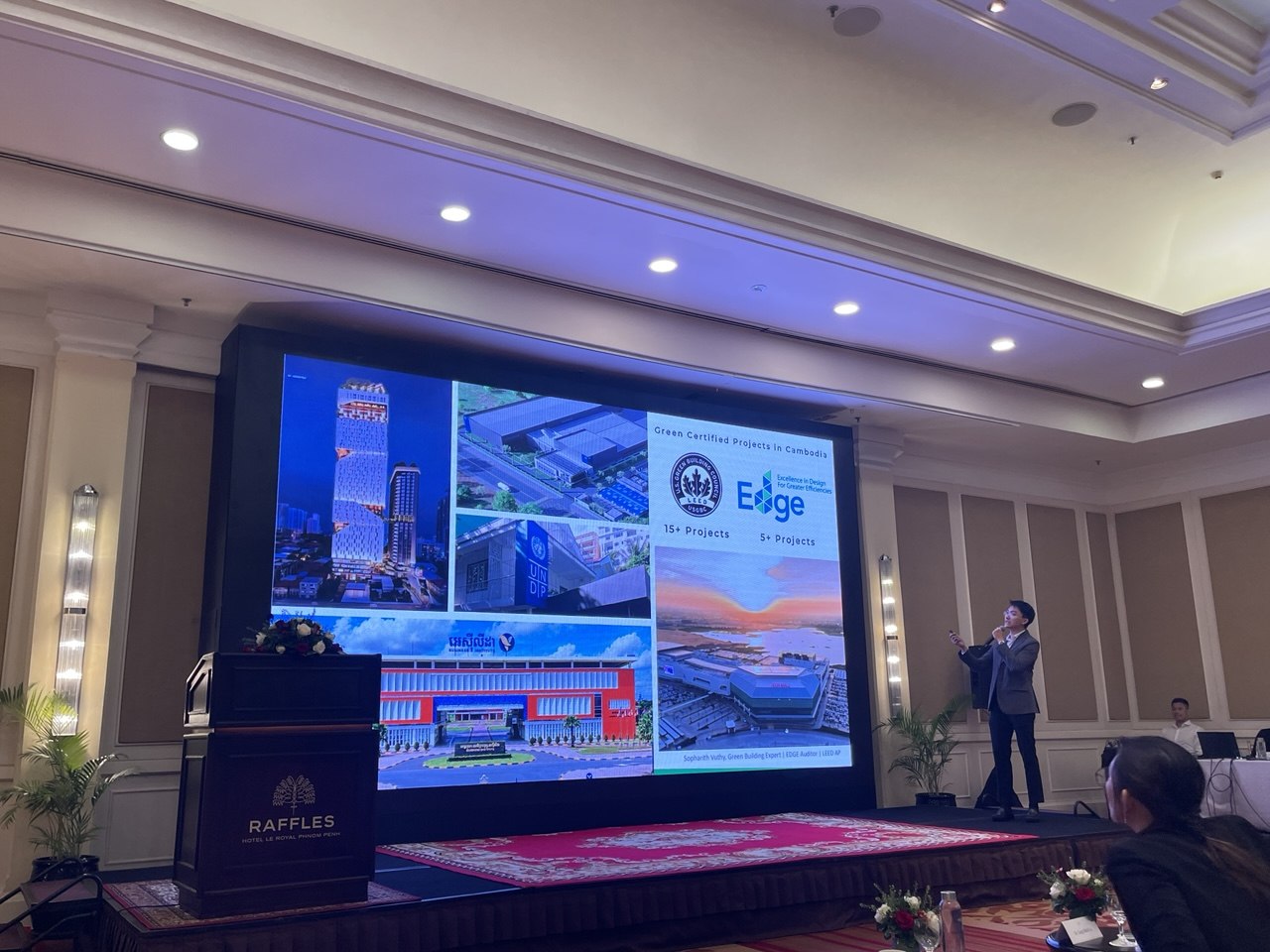
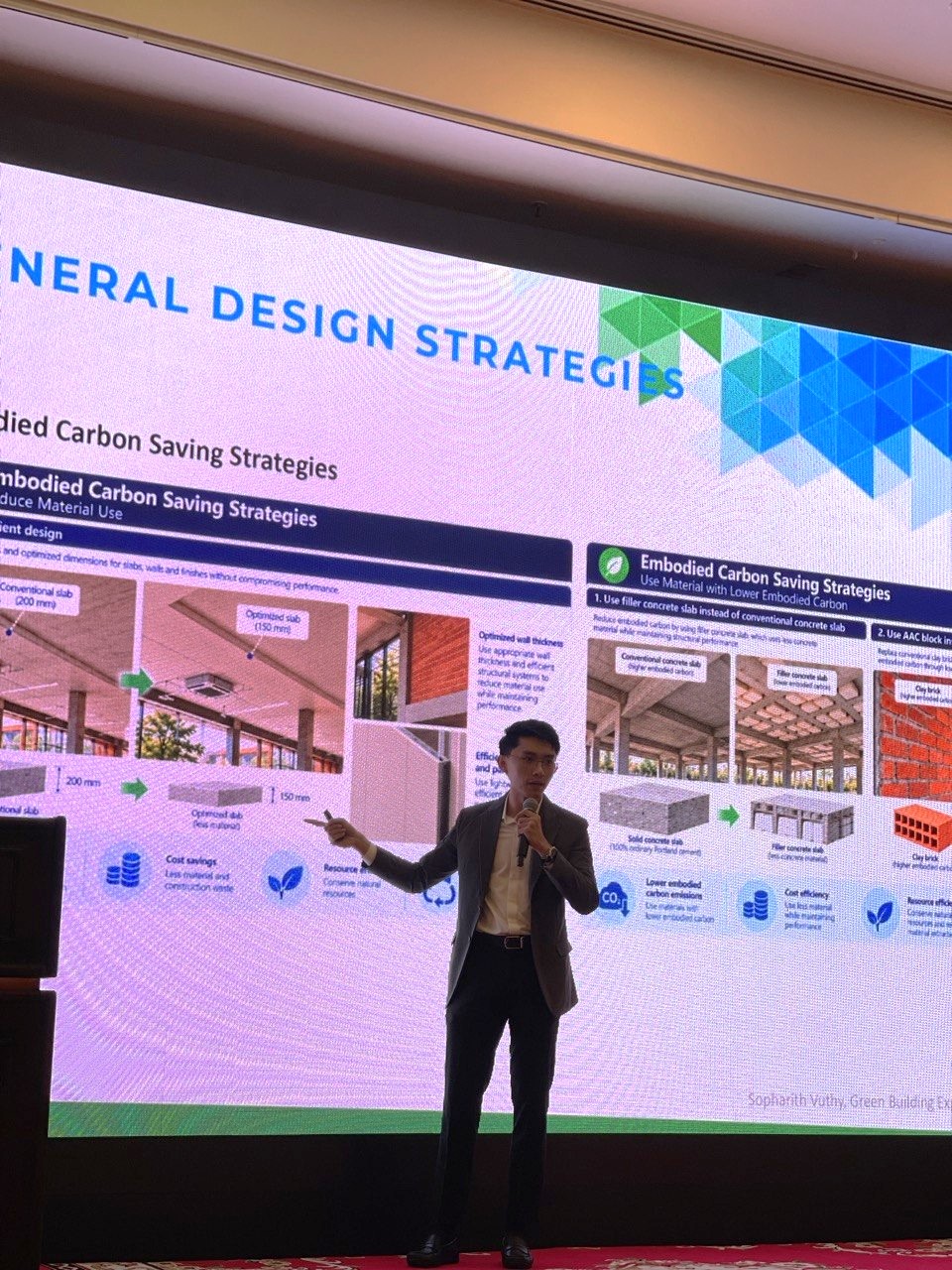
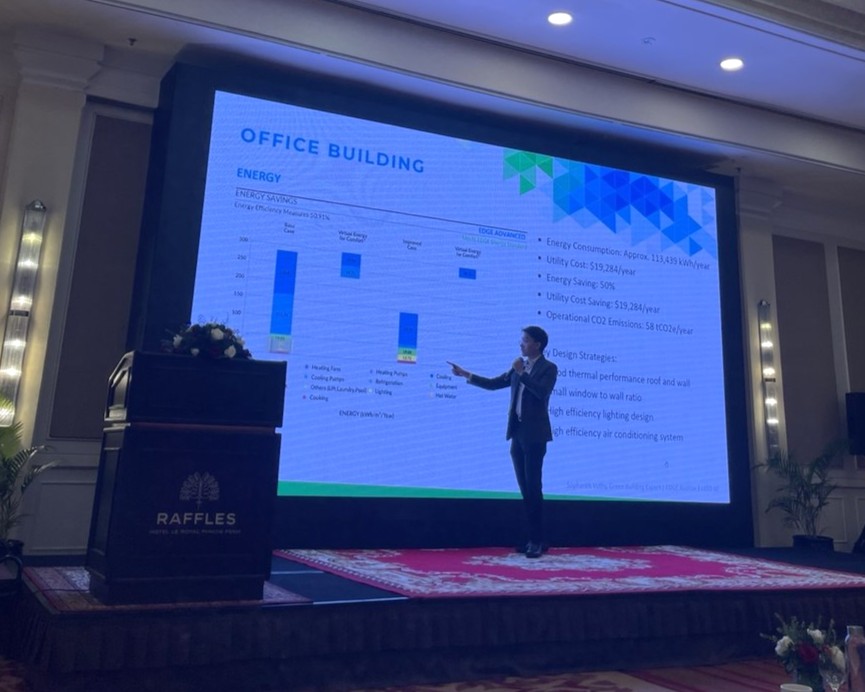
The practical core of the workshop came from Sopharith Vuthy, Senior Project Engineer at BEE Incorporations and a local EDGE Expert and Auditor. His presentation was built around projects already delivered in Cambodia. He covered the certification process, the key considerations that shape decisions on local sites, and the lessons that emerge when teams move from design intent to completed building.
Closing the Gap Between Certification and Delivery
Sopharith’s session focused on a recurring challenge in green building work: the gap between what a certification standard requires and what a project team can actually deliver on site. He discussed how to bridge that gap, from early design choices through construction documentation and final verification. The examples came from Cambodian projects, so the audience could see how EDGE responds to local materials, practices, and procurement rules.
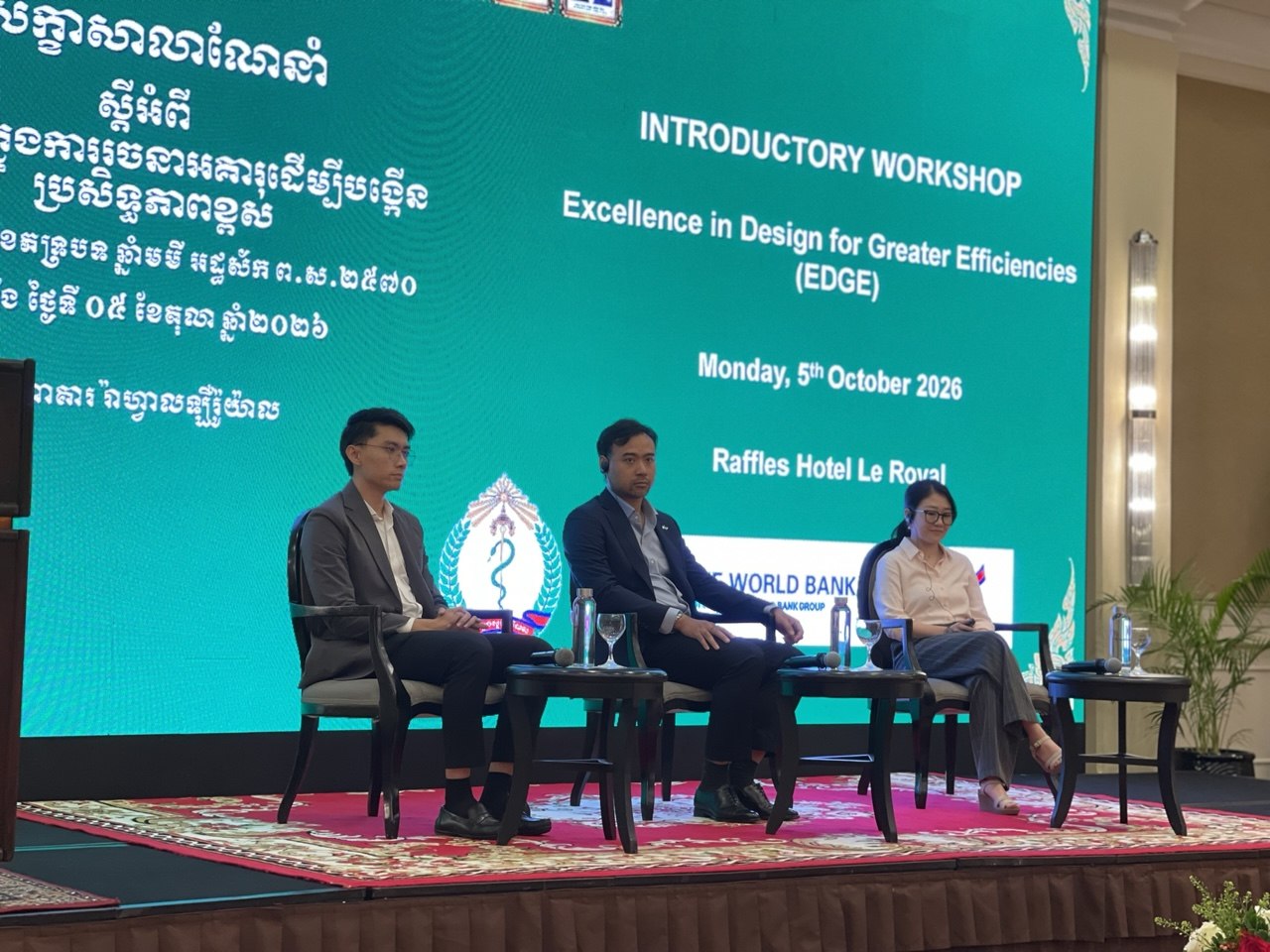
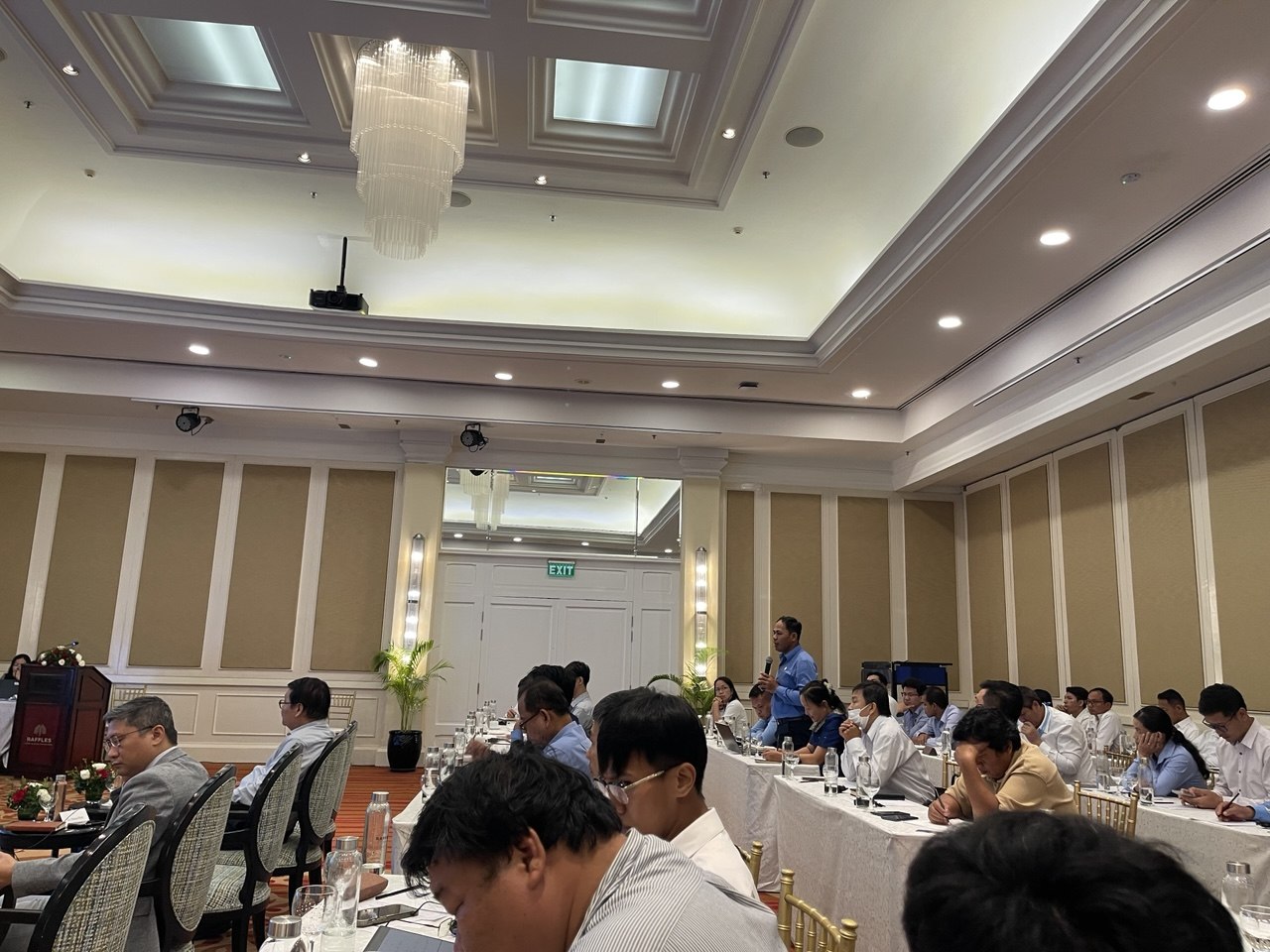
The workshop closed with a panel discussion and Q&A. Participants raised questions about opportunities, challenges, and practical considerations for adopting EDGE certification in Cambodia. The discussion drew together the technical, financial, and institutional angles that will determine whether EDGE becomes a routine part of health sector construction.
What This Means for Health Sector Projects
For Cambodia’s Ministry of Health, the workshop offered a structured introduction to how EDGE could be applied to its project portfolio. The Ministry’s Project Working Group left with a clearer sense of the certification path, the baseline-and-target approach that EDGE uses, and the local expertise available to guide implementation.
For BEE, the event was a chance to put local EDGE auditing experience directly in front of the institutions that will shape Cambodia’s green building market. The conversation was technical, specific, and grounded in projects that have already moved through the certification process.
The EDGE Introductory Workshop did not end with a signed commitment. It ended with a shared vocabulary and a clearer view of the next steps. That is usually how standards begin to take hold.