
Mongolia’s building stock carries an outsized carbon footprint for its population, and most of it has never been measured against an international green building standard. At COP17’s Green Zone in Ulaanbaatar on 26 August, BEE Incorporations Mongolia made the case that certification is not just a label but a design tool already being used in the country.
At booth D7, Project Engineer and LEED AP Aminsarnai Batkhurel led an 11:00 AM session for delegates. The presentation was split into two parts. The first introduced green building principles and the sustainability training pathways that turn those principles into practice. The second reviewed LEED case studies already implemented in Mongolia, walking through what the standard required at each project and how the teams met those requirements.
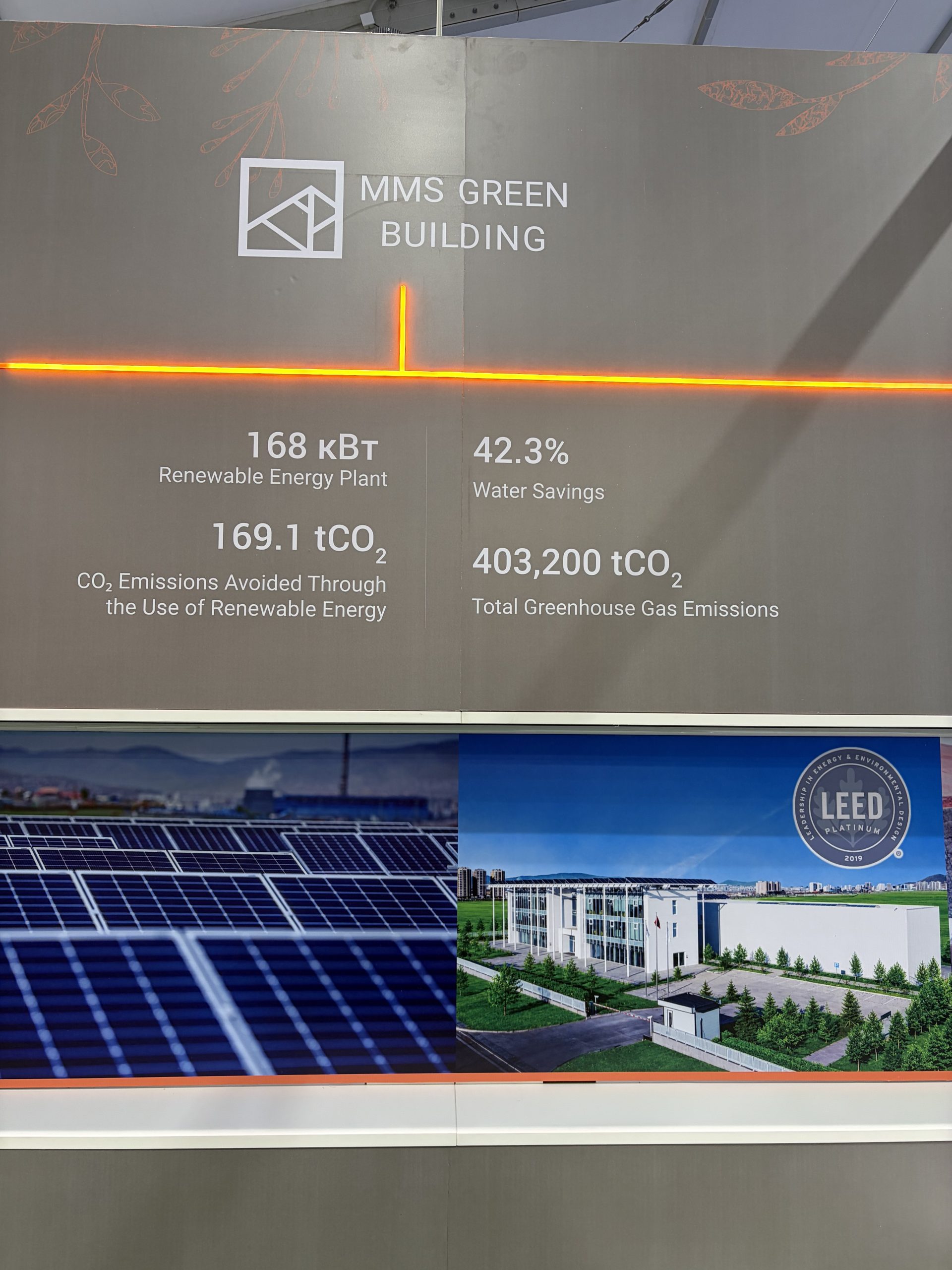
The BEE stand shared wall space with partners including MMS Green Building, NEXUS, EMC, and AVANDRA. A display from MMS Green Building showed project-level metrics for one of its LEED Platinum-certified buildings, including a renewable energy plant and reported water savings. Having these built examples on the same stand made the point that green building in Mongolia is moving from concept to construction.
For developers, architects, and facilities managers in the audience, the session offered a practical entry point into certification: what LEED asks, how training prepares teams to deliver it, and what completed projects in Ulaanbaatar now look like. The case studies also gave students and young professionals a concrete reference for how sustainability training connects to real buildings.
BEE Incorporations Mongolia plans to continue this work through its training and certification services, using local case studies as the starting point for the next round of projects.